Surfing the Gulf of California: a season that follows the ocean's movement
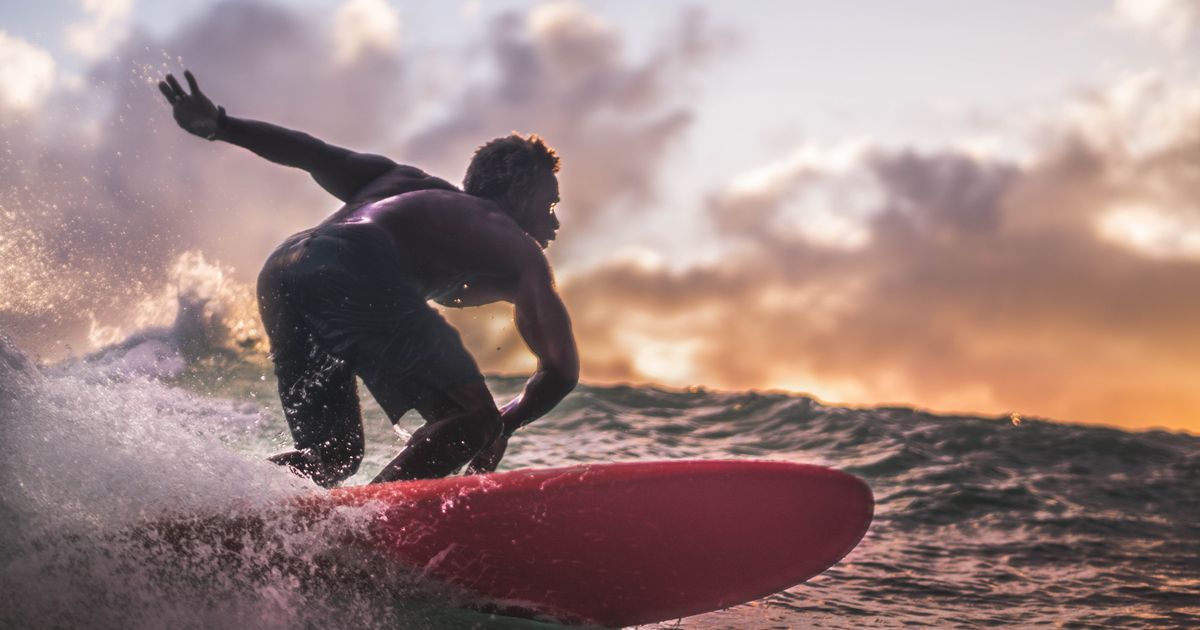
Some surf destinations live for a single season. Others see the ocean change personality throughout the year, forcing the surfer to learn how to read it. The Gulf of California coast in Baja California Sur belongs to the second category.
Here, the experience isn't only about finding a good wave. It's about understanding how the ocean moves, what direction the swell brings, which beach receives it best, and how wave quality changes as the seasons progress. That's precisely one of the reasons Los Cabos is such an interesting destination for those who travel looking for surf.
March to November: when the ocean comes alive
Generally speaking, for the Los Cabos area, spring marks the start of an especially interesting surf window that extends into autumn. Between March and November, surfable conditions can be found at different points along the Gulf of California coast, though not all spots work at the same time or with the same swell type. The key lies in each wave's orientation.
Surfline divides the Los Cabos surf territory into different zones based on orientation and swell exposure. Costa Azul, for example, is particularly receptive to south and southeast swells, while several East Cape point breaks respond especially well to south swells.
Summer: when the south swell changes the game
Summer tends to be especially interesting. South swells can travel great distances and reach the south and southeast-facing coasts of Baja California Sur. When they coincide with favorable wind and the right tide, waves that may have looked calm for days transform completely.
Nine Palms is a good example. With small waves it can be a relatively slow, accessible wave. But when a summer south swell of sufficient size arrives, the same point break can become a much faster, more defined wall.
Shipwreck offers another example of how this coast works. The main right is faster and more pronounced than Nine Palms, while a reef section can produce lefts. It's not enough to ask "are there waves?" The right question is: what swell is coming in, and which wave knows how to receive it?
Costa Azul: an extraordinary concentration of surf
Costa Azul is one of the best examples of this diversity. In a relatively short stretch of coast, several breaks with very different personalities can be found.
Surf-Forecast classifies Costa Azul as a very consistent beach break and points to summer as an especially favorable season, with predominant south-southeast swells and favorable northwest winds. That means one surf session at Costa Azul doesn't necessarily resemble the next. It can be a day to learn. Another to work on paddling. Another to practice carving. And another to simply sit on the sand and watch.
Not all waves need to be big
One of the most mistaken ideas around surfing is thinking that a good session necessarily requires big waves. For someone learning, a small, clean, well-formed wave can be much more valuable than a big, fast wave.
Progression occurs when the surfer learns to read the ocean, paddle efficiently, position correctly, catch the wave at the right moment, and then use the wave's wall to start making turns. Old Man's, for example, is predominantly a right, with a more rolling character suitable for all levels.
And when winter comes, the ocean doesn't disappear
From December to January, depending on the spot and conditions, surf activity can decrease considerably compared to the months dominated by south swells. But it would be wrong to simply say "there are no waves." The ocean is still there.
And for those who don't need every trip to become a surf session, winter offers another extraordinary way to experience it.
Paddleboarding among whales
Whale watching season in Los Cabos begins around December and extends through winter and early spring. So a winter morning can completely change pace. Instead of paddling toward the lineup, you paddle over calm water. Instead of waiting for a set, you watch the horizon. And instead of measuring the session in waves caught, you measure it in the appearance of a fin, a blow, or the movement of a whale in the distance.
For us, that's part of the magic of this destination: the ocean doesn't stop being the protagonist when the most active surf season ends.
A destination you read, not just visit
Surfing the Gulf of California requires more than knowing how to stand on a board. You need to read the territory: the coast's orientation, the swell direction, the wind, the tide, the bottom, and above all, the level of the person entering the water.
That's why at Surf's Up Cabo we don't just think about taking you to "the surf beach." We think about finding the right wave for you, that day. Because in Los Cabos, the question isn't simply where there's surf. The question is: where is the wave that makes sense for you today?
Have questions about this guide? Message us and we'll help.
Message us on WhatsApp